1
2
3
4
5
1 |
2 |
3 |
4 |
5 |
 |
 |
|
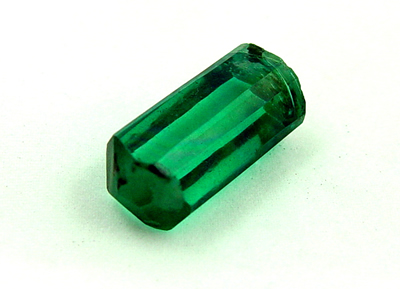
1 This high quality hydrothermally lab-grown hexagonal Emerald crystal has the same geometric atomic structure as a natural emerald. One of the easiest ways to tell a natural emerald apart from its lab-grown cousin is that the natural emerald will have many inclusions. Of course there can also be low grade lab-grown emeralds that are much harder to distinguish from naturals. Emeralds, like quartz, grow in superheated water under extreme pressure, which is why they are called hydrothermal crystals. |
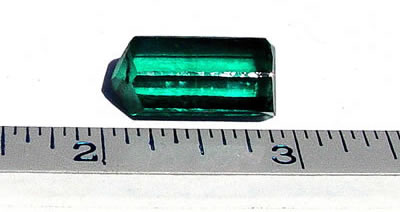 |
2 A raw high-quality hydrothermally lab-grown hexagonal Emerald crystal, grown in a way that results in the atomic lattice being identical to that of a natural emerald made by Mother Nature and the laws of physics. Many people struggle with the concept of a geometrically shaped crystal grown in a controlled environment that imitates nature. But at one fiftieth the price of an untreated natural emerald of the same quality, most individuals simply can't afford a natural emerald of this kind of astrological efficacy.
|
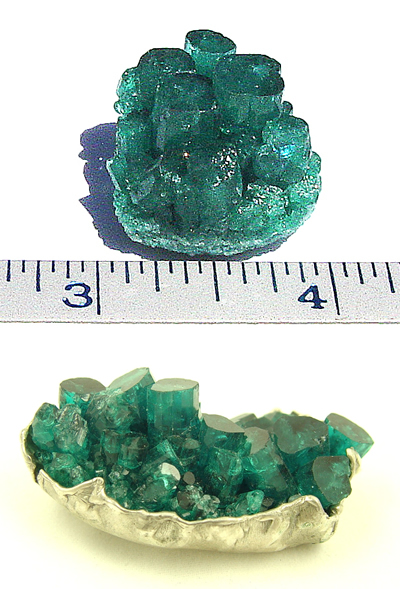 |
3 An example of a low quality laboratory-grown Emerald cluster. At first sight almost any gemologist will think this is a cluster grown by Mother Nature, unless they know the lab it came from. |